Banker Scorecard
Senior banker evaluations, reimagined

Background
A banker scorecard is a framework used twice a year to assess Managing Director (MD) coverage bankers based on revenue generation, client management, key relationships, and deals completed, determining their overall contribution to the bank.
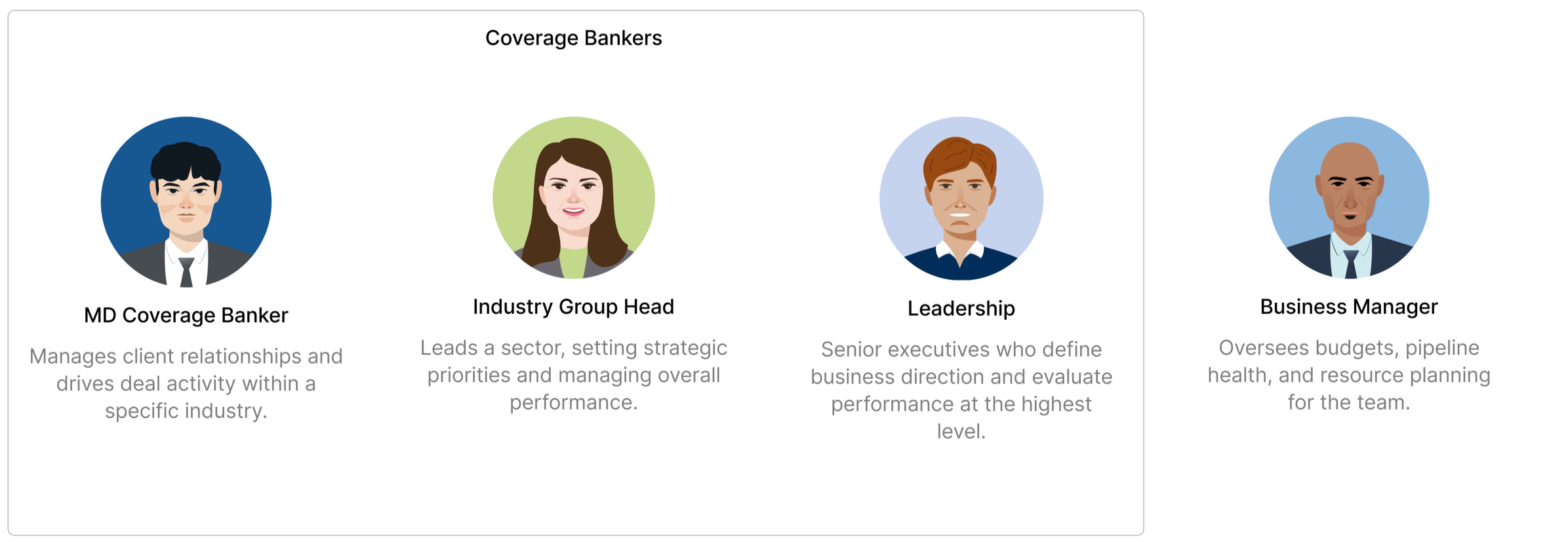
Users
Problem
Business Management teams are responsible for tracking the performance of MDs. The existing process relied entirely on PowerPoint, a file was prepared for each banker, distributed manually, and teams were required to follow up individually to collect responses. Once completed, all decks were compiled into a single file for senior leadership review.
Beyond the time cost, the process had a deeper limitation: data was captured in a static format that could not be searched, aggregated, or analyzed across cycles, making it impossible to surface meaningful insights at an organizational level.
How might we automate the banker scorecard process to give senior leadership actionable insights across review cycles?
Old Process
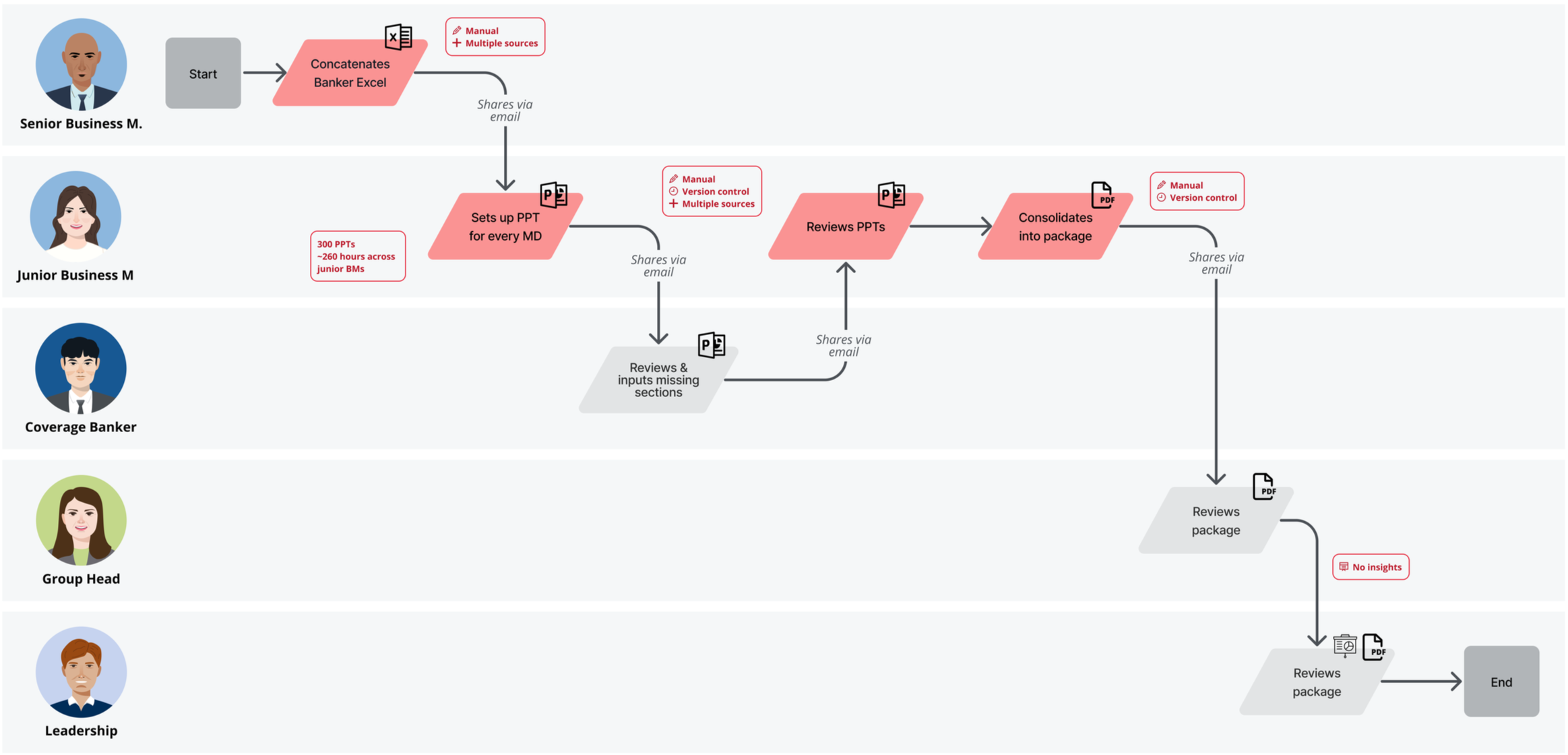
The existing process relied on manual PowerPoint distribution across four steps.
Lo-Fi Wireframes
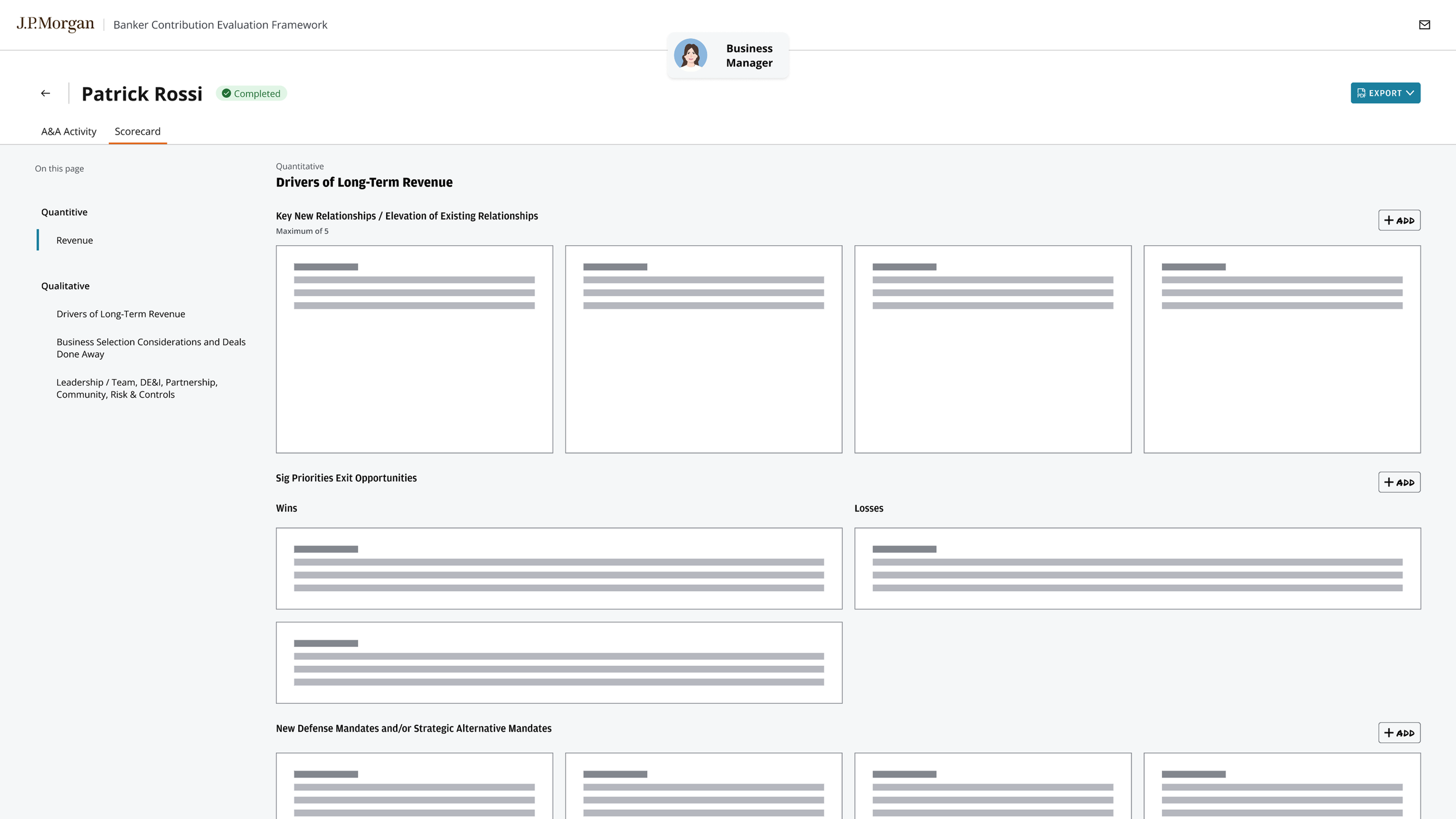
NEW PROCESS
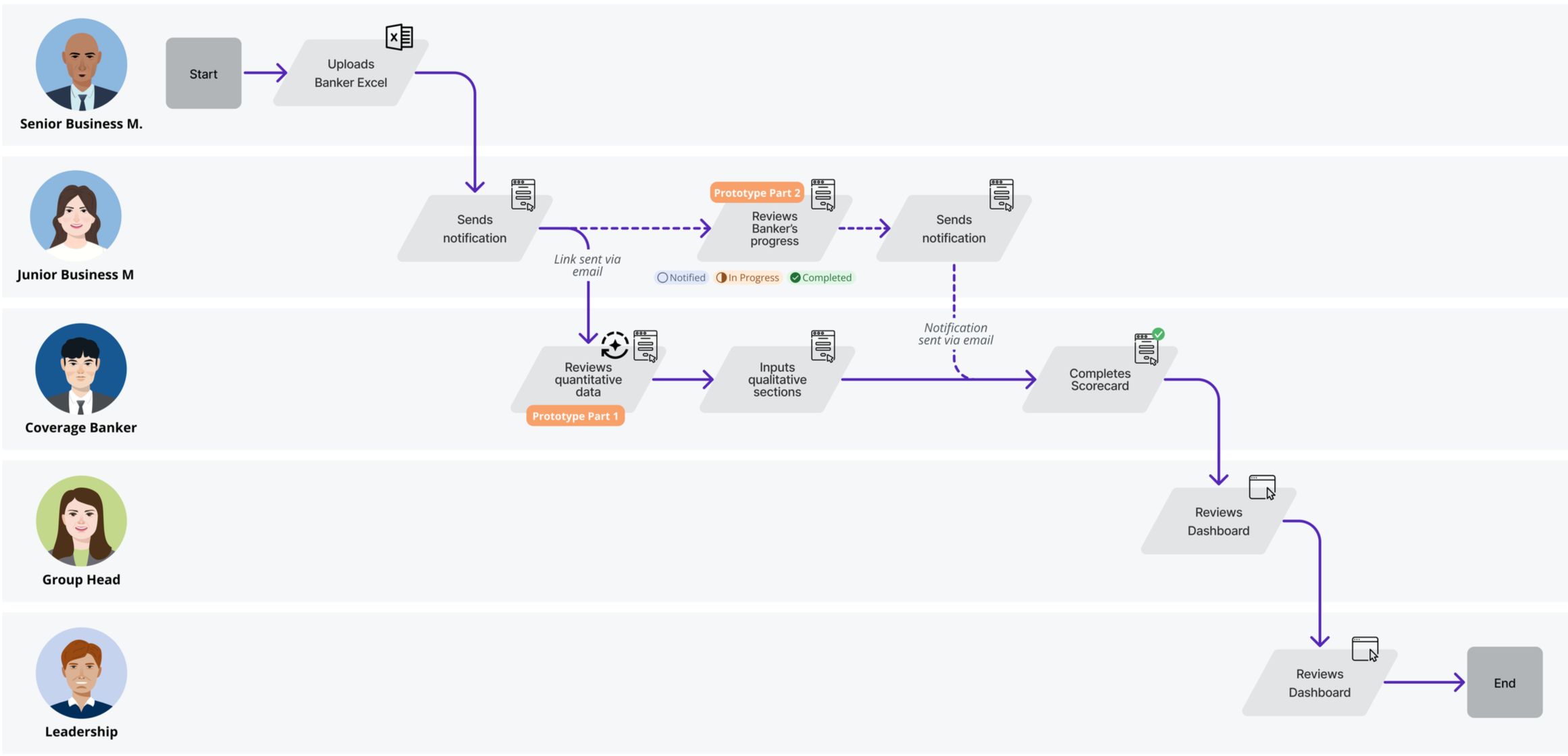
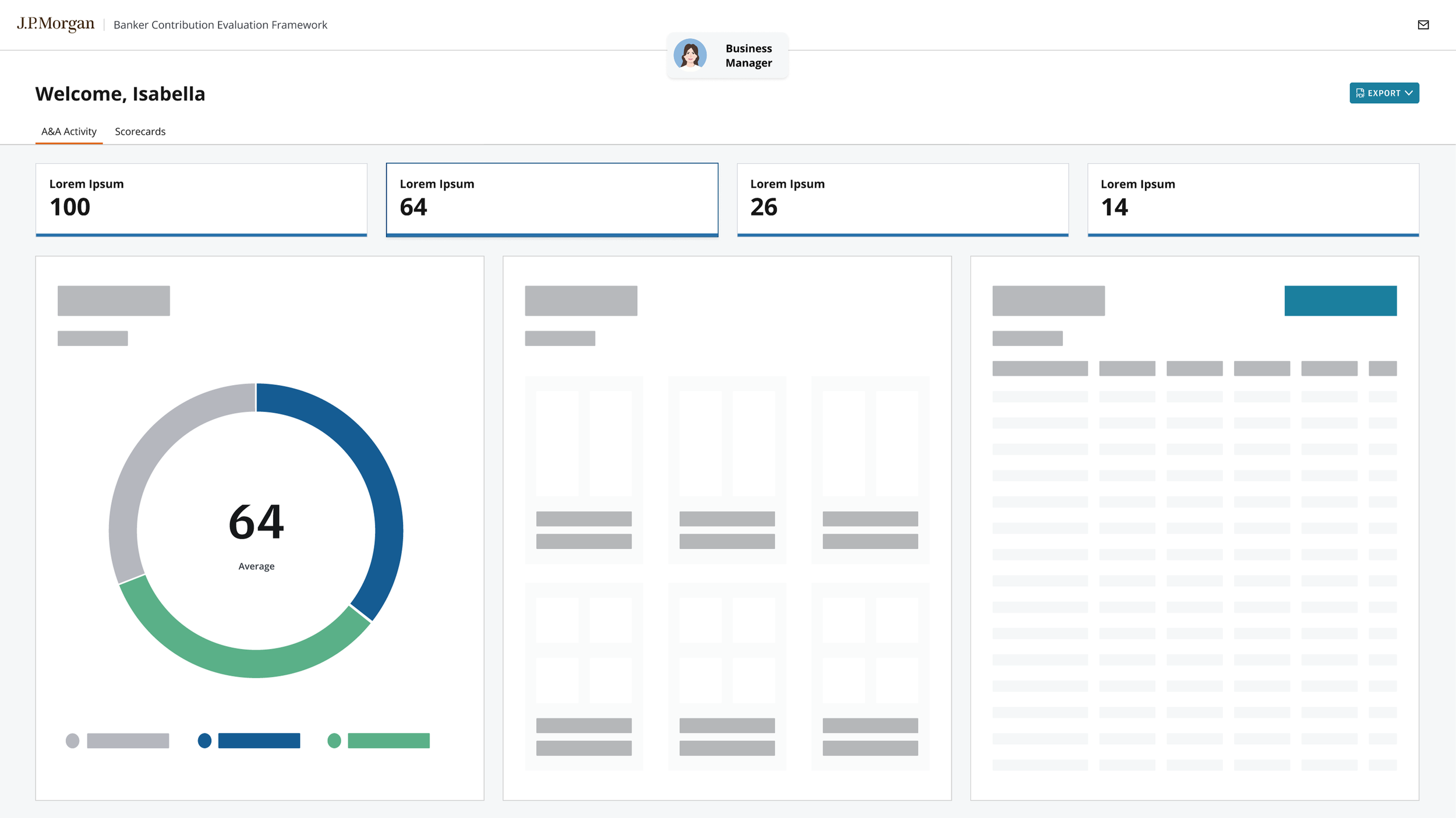
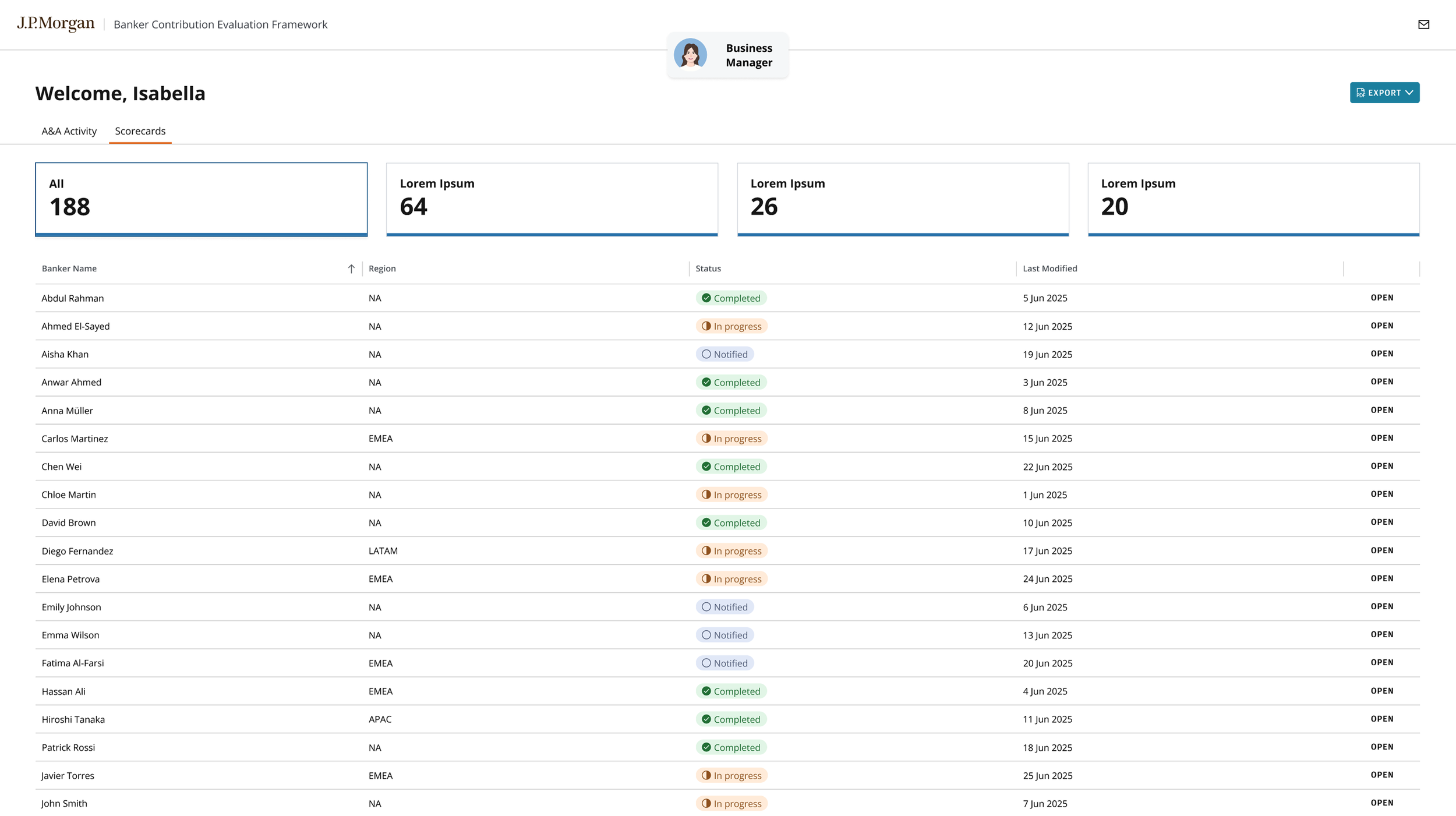
The redesigned process consolidated all steps into a single digital platform.
What I designed
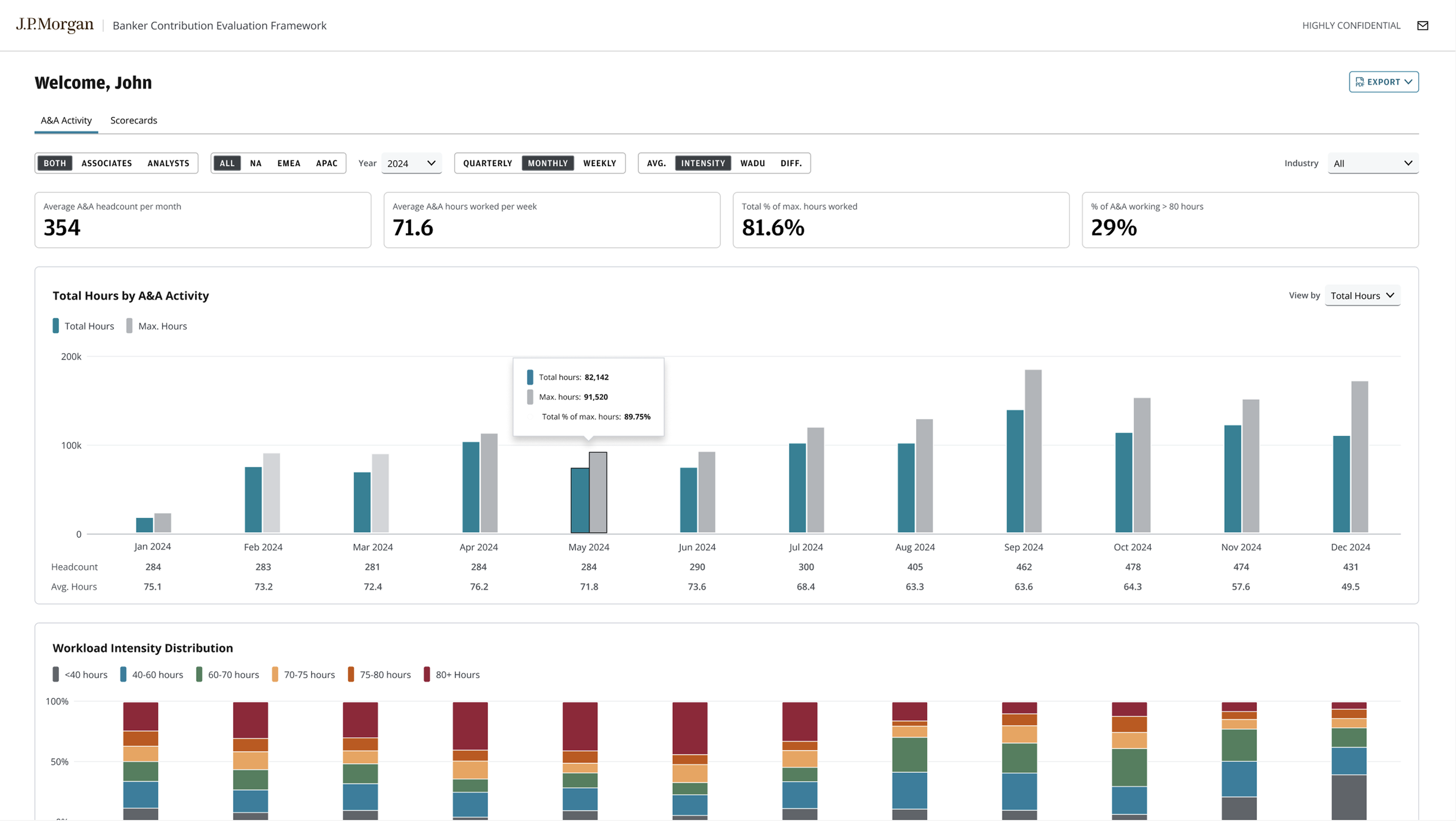
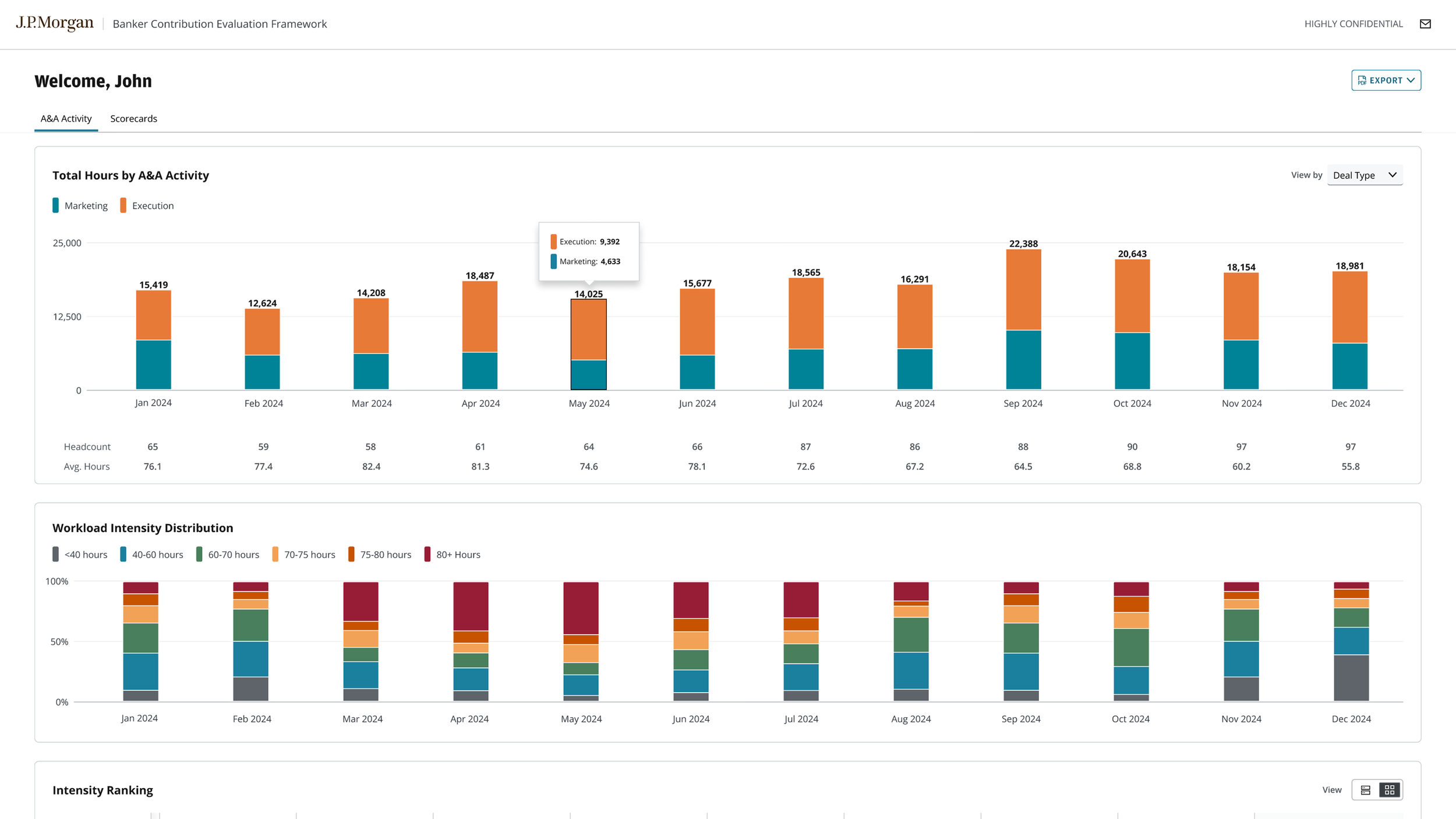
Beyond digitizing the scorecard itself, the platform introduced a dashboard that surfaces the newly captured data alongside existing metrics enabling Leadership to analyze performance trends across cycles for the first time.
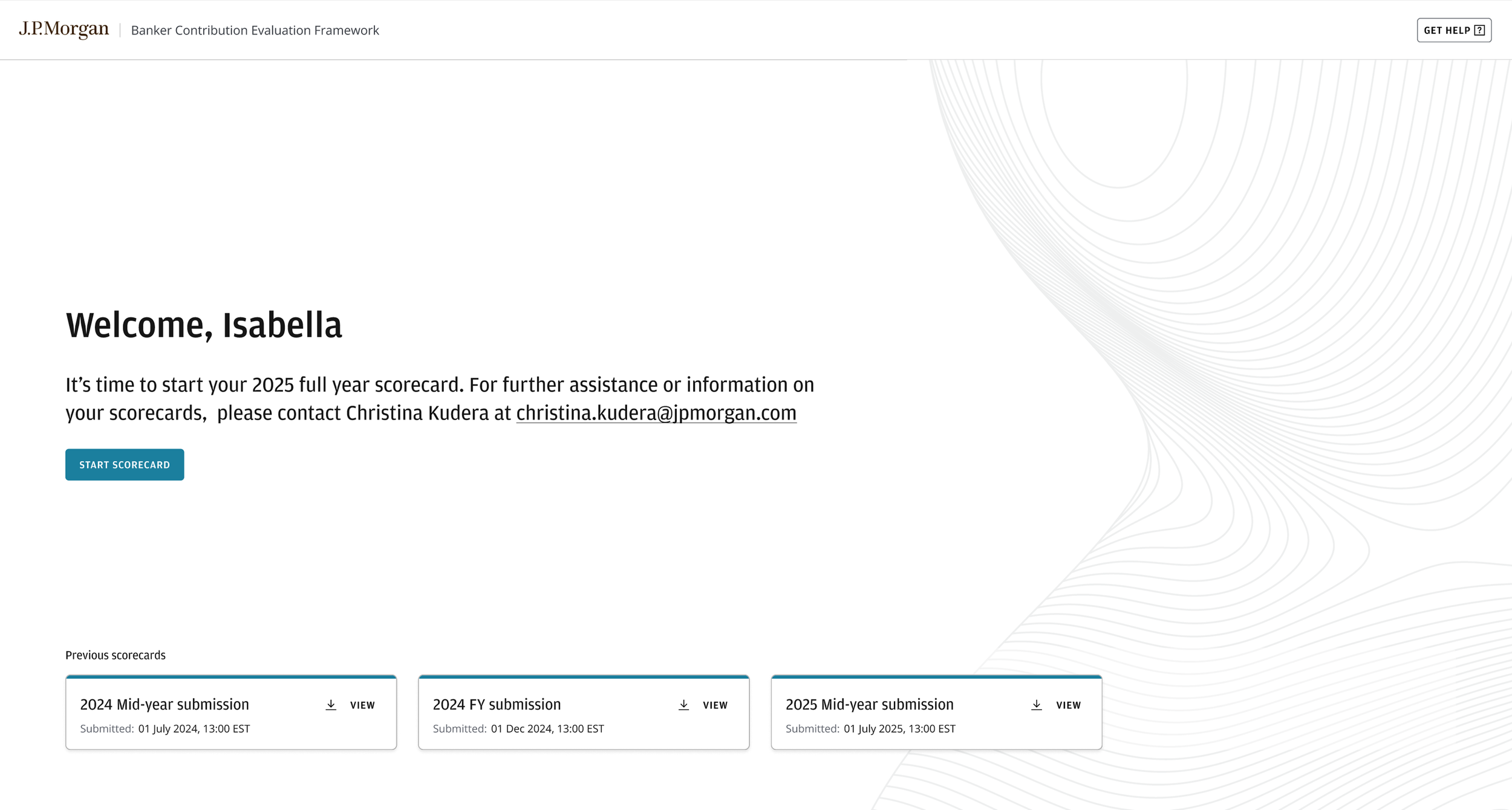
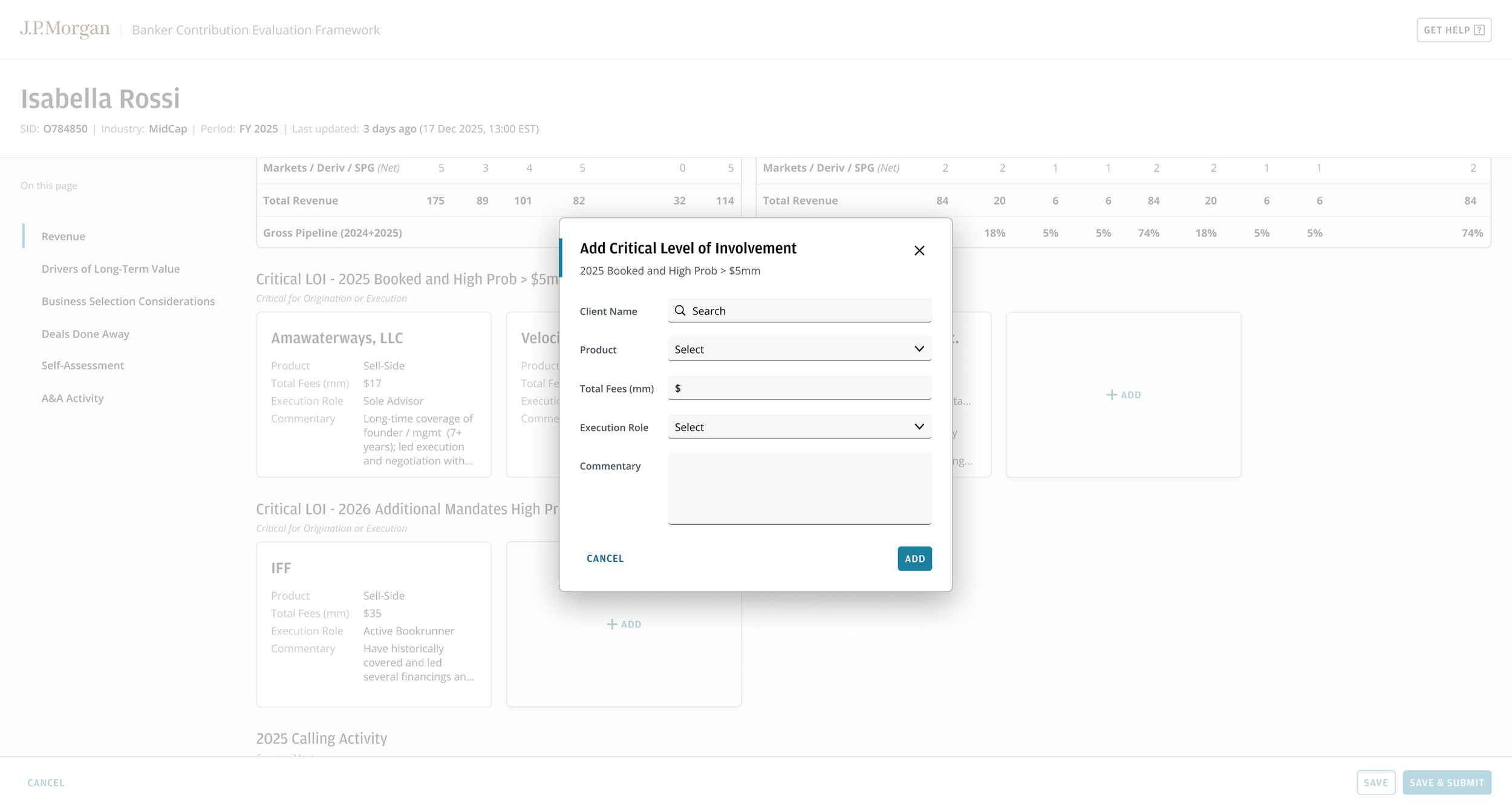
Digital Scorecard
Senior bankers complete their performance scorecard directly within the platform, capturing key deals, client relationships, and coverage activity.
Leadership Dashboard
Senior leadership accesses a consolidated view across all senior bankers, replacing the manually compiled PDF.
Junior Banker Workload Monitor
A real-time view of banker hours by desk and sector, flagging capacity issues and ranking teams against organizational benchmarks.
Outcome
The Banker Scorecard eliminated the manual compilation process entirely. In its first cycle, Business Management teams saved 130 hours with the process running twice a year, the impact compounds with every cycle. Performance data is now captured digitally, making it accessible and actionable across every review cycle.